Discover The Solace Edit: an exclusive series of bespoke treatments. Explore our curated offers.
Glycation & Skin Ageing | Cosmetic Nurse Guide for Skin Health
Discover the scientific truth behind glycation and its impact on skin ageing. Our cosmetic registered nurses delve into the cellular mechanisms of Advanced Glycation End-products (AGEs), explaining how sugar affects your skin's vital collagen and elastin. Learn evidence-based lifestyle and dietary strategies to mitigate glycation, promote healthy skin, and maintain optimal dermal vitality. Educational insights for lasting skin wellness from Derma Solace Aesthetics.
Yee Lao Registered Nurse, cosmetic dermatology nurse
3/24/20265 min read
Glycation: The Science of Sugar and Skin Ageing
As a cosmetic registered nurse, my goal is to empower you with scientific knowledge about skin health. Today, we delve into a fundamental biological process that significantly influences skin ageing: glycation.
What is Glycation? The Cellular Story
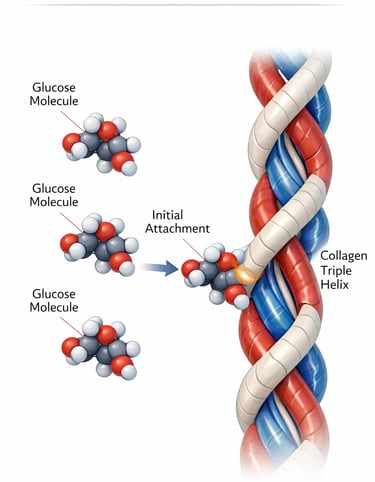
Glycation is a non-enzymatic reaction where reducing sugars, such as glucose and fructose, spontaneously bind to proteins or lipids without the involvement of enzymes. This process initiates a cascade of reactions that ultimately lead to the formation of stable, irreversible compounds known as Advanced Glycation End Products (AGEs) [1].
At the cellular level, this process unfolds as follows:
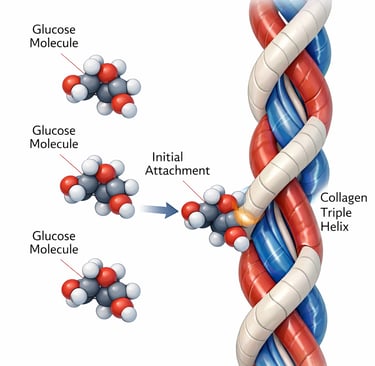
Initial Sugar-Protein Attachment: When glucose levels are elevated, sugar molecules can form a reversible Schiff base with the free amino groups of proteins. This initial attachment is transient.
Amadori Rearrangement: The Schiff base then undergoes a more stable, but still reversible, rearrangement to form an Amadori product.
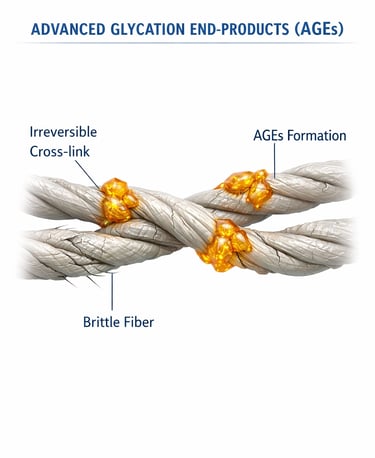
AGE Formation (Maillard Reaction): Over time, and through a series of complex chemical rearrangements, oxidation, and dehydration, these Amadori products transform into a diverse group of highly reactive and irreversible compounds: AGEs. This final stage is analogous to the Maillard reaction observed in food browning [2].
The Impact of AGEs on Skin Architecture
The youthful integrity of our skin is largely dependent on the structural proteins collagen and elastin. Collagen provides tensile strength and structure, while elastin confers elasticity and recoil. Unfortunately, these long-lived proteins are prime targets for glycation due to their slow turnover rate [3].
When AGEs accumulate and bind to collagen and elastin fibres within the dermal extracellular matrix, several detrimental effects ensue [4]:
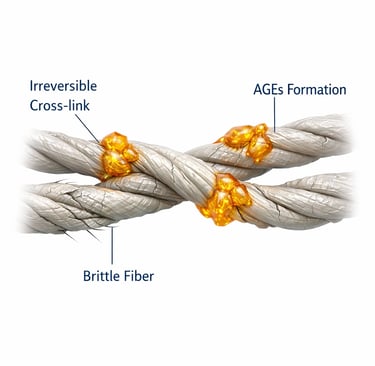
Cross-linking and Stiffening: AGEs form abnormal, rigid cross-links between adjacent collagen and elastin fibres. This alters their natural, organised structure, leading to a loss of flexibility and increased stiffness, akin to the difference between a new, pliable rubber band and an old, brittle one.
Loss of Elasticity and Resilience: The increased rigidity directly compromises the skin's biomechanical properties, resulting in reduced elasticity, impaired recoil, and the formation of deeper rhytides (wrinkles) and skin laxity [5].
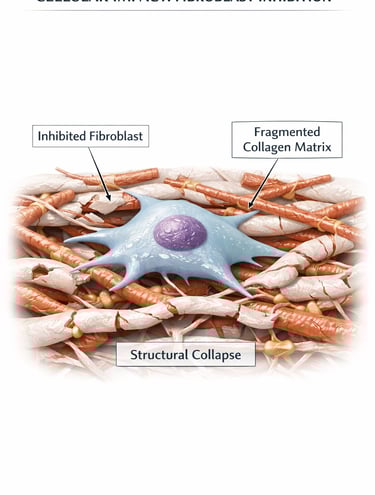
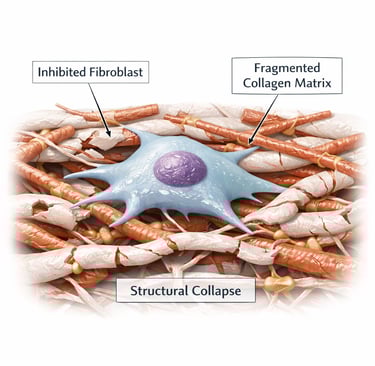
Impaired Cellular Function: Fibroblasts, the primary cells responsible for synthesising new collagen and elastin, are negatively impacted by the presence of AGEs. Their proliferative capacity and ability to produce healthy extracellular matrix components are diminished, further contributing to dermal degradation [6].
Pro-inflammatory and Pro-oxidative Effects: AGEs can also activate cellular receptors (e.g., RAGE), triggering inflammatory responses and increasing oxidative stress within the skin. This chronic low-grade inflammation and oxidative damage contribute to a dull complexion and uneven skin tone [7].
Manifestations of Glycation in Skin
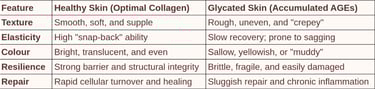
The cumulative effects of AGE accumulation manifest as visible signs of skin ageing, often overlapping with photoageing or chronological ageing. These include:
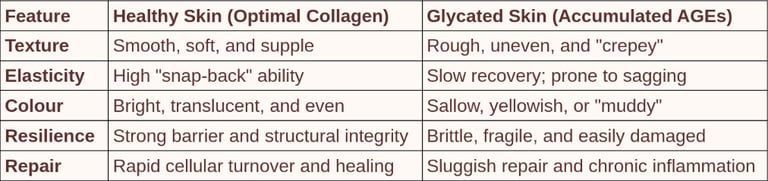
These changes collectively contribute to deep wrinkles, a perceived loss of facial volume (often termed "Sugar Sag"), and a general reduction in skin radiance [5] [7].
Mitigating Glycation: A Science-Based Approach
While glycation is an inherent biological process, its rate and impact can be significantly influenced. A proactive, science-based approach focuses on minimising AGE formation and supporting skin health.
1. Lifestyle and Dietary Strategies: Foundational Principles
The most effective strategies to combat glycation involve daily lifestyle and dietary choices, as these directly regulate systemic sugar levels and oxidative stress.
Dietary Sugar Reduction: The primary intervention is to reduce the intake of refined sugars, high-fructose corn syrup, and processed foods. Lowering circulating glucose levels directly reduces the substrate available for glycation reactions.
Antioxidant-Rich Nutrition: A diet abundant in fruits, vegetables, and whole grains provides a rich source of antioxidants. These compounds neutralise reactive oxygen species, thereby mitigating oxidative stress that can accelerate AGE formation and exacerbate their damaging effects [8].
Mindful Cooking Methods: High-temperature cooking methods (e.g., grilling, frying, roasting) can generate AGEs directly in food. Opting for gentler methods like steaming, poaching, or stewing can reduce dietary AGE intake.
Adequate Sleep: Restorative sleep is crucial for cellular repair processes and maintaining metabolic homeostasis, including glucose regulation. Chronic sleep deprivation can contribute to increased oxidative stress and inflammation.
Stress Management: Chronic psychological stress can elevate cortisol levels, which may influence blood glucose regulation. Practices such as meditation, yoga, and mindfulness can support metabolic balance.
Regular Physical Activity: Exercise improves insulin sensitivity, allowing cells to utilise glucose more efficiently and reducing its prolonged presence in the bloodstream, thus limiting opportunities for glycation.
2. Topical Support: Enhancing Cellular Defence
Topical agents can complement foundational lifestyle strategies by providing direct antioxidant protection and supporting dermal integrity.
Antioxidant Skincare: Formulations containing potent antioxidants (e.g., Vitamin C, Vitamin E, ferulic acid, green tea polyphenols) help to scavenge free radicals and protect skin cells from oxidative damage, a key cofactor in glycation-induced skin ageing.
Anti-Glycation Ingredients: Certain topical ingredients, such as carnosine or specific peptides, are being investigated for their potential to inhibit AGE formation or interfere with their cross-linking activity. Research in this area continues to evolve.
3. Advanced Interventions: Clinical Perspectives
For individuals seeking to address existing signs of glycation-induced damage and further enhance skin resilience, advanced clinical interventions can be considered. These treatments aim to stimulate dermal remodelling and support cellular rejuvenation.
Collagen-Stimulating Therapies: Modalities such as certain laser therapies, microneedling, and chemical peels can induce controlled micro-injuries or chemical exfoliation, prompting the skin's natural wound-healing response. This process stimulates fibroblasts to produce new, healthy collagen and elastin, aiding in the replacement of glycated fibres and improving overall skin texture and firmness.
Advanced Skin Rejuvenation Protocols: Specialised protocols are designed to optimise cellular turnover, enhance nutrient delivery, and support the skin's intrinsic repair mechanisms, contributing to improved skin health and radiance.
These interventions are typically integrated into a comprehensive skin health plan, tailored to individual needs following a thorough consultation.
Conclusion
Understanding glycation as a fundamental biochemical process empowers individuals to make informed decisions regarding their skin health. By prioritising evidence-based lifestyle and dietary strategies, complemented by targeted topical support and, where appropriate, advanced clinical interventions, it is possible to significantly influence the trajectory of skin ageing and maintain optimal dermal vitality. Investing in this scientific understanding is key to long-term skin wellness.
References
Research Advances on the Damage Mechanism of Skin Glycation and Related Inhibitors
The effects of advanced glycation end‐products on skin and potential anti-glycation strategies
Advanced glycation end products (AGEs) promote melanogenesis through receptor for AGEs
Mitigating Glycation and Oxidative Stress in Aesthetic Medicine
Enhance
Email: hello@dermasolace.com.au
Beauty
Join the Solace Circle
Mobile: 0435 876 628
©2026 Derma Solace Aesthetics

